
How the Species Survival Fund helped nature recovery across England
| Attachment | Size |
|---|---|
| 5.28 MB | |
| 6.25 MB | |
| 1.41 MB |
The final independent evaluation of the Species Survival Fund (SSF) shows how investment has helped restore habitats, support species recovery and connect thousands of people with nature across England.
Launched in 2023, the £25million SSF was delivered by us on behalf of the Department for Environment, Food and Rural Affairs (Defra). The programme supported 20 projects across England – from Northumberland to Cornwall – to restore and create wildlife-rich habitats and strengthen people's connection with nature.
What SSF investment has achieved
The evaluation found that the programme delivered 4,800 hectares of habitat action across England, an area approximately the size of the city of Bath or 6,700 football pitches. This exceeded the programme's original target by more than 1,100 hectares and included:
- Planting more than 127,500 trees.
- The completion of 3,596 habitat and species surveys, helping to strengthen the evidence base needed to support long-term nature recovery.
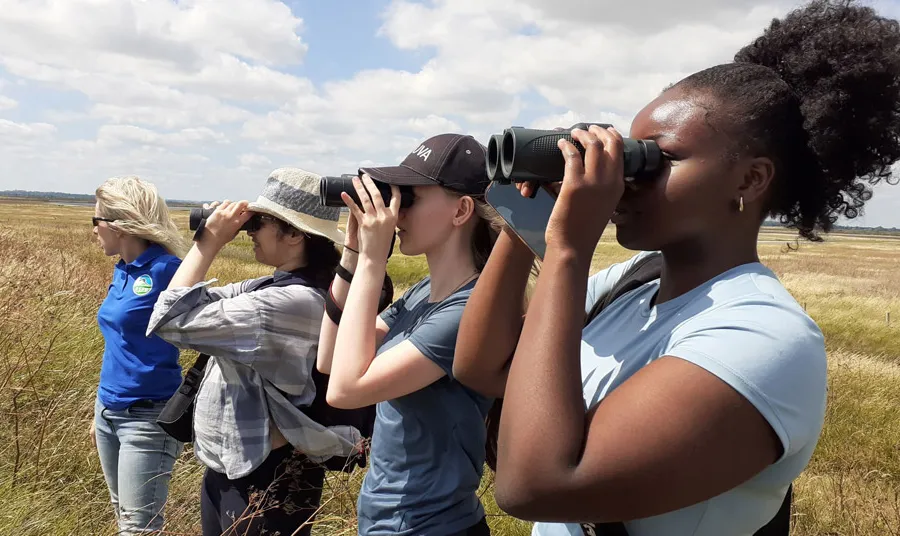
Alongside environmental outcomes, the programme helped people build stronger connections with nature. More than 51,000 people were engaged through events and activities. Over 13,000 volunteers were involved, nearly 3,900 of which were volunteering for the first time.
The programme also strengthened skills and capacity across the environmental sector, supporting almost 200 roles, including 19 traineeships and eight apprenticeships. More than 600 qualifications were achieved.
Eilish McGuinness, Chief Executive of The National Lottery Heritage Fund, said: "This final evaluation demonstrates what can be achieved through investment in places, skills and resources, showing how habitats such as grasslands, woodlands, wetlands and rivers can be restored to support thriving wildlife and building resilient ecosystems for future generations.”
Explore some of the projects
Coastal Grasslands Reconnected: In County Durham the Durham Heritage Coast Partnership created Tina's Haven, a 34-hectare nature reserve developed in memory of Tina Robson, who lost her life to trauma-based addiction. It forms an important link in a wider coastal habitat corridor while creating a space for wellbeing and social connection.
Species Coastal and Wetlands: The RSPB improved coastal and wetland habitats across 10 reserves and partner sites including the Hoo Peninsula. Early signs of species recovery have been recorded, with lapwing and terns responding to newly created islands and restored wetlands. The project worked with local and underserved groups to improve access to nature.
Species Survival in Hertfordshire’s Chalk Rivers: Hertfordshire and Middlesex Wildlife Trust restored chalk rivers across five sites, reprofiling banks, installing woody habitats, constructing a kingfisher nest bank and removing barriers to allow fish to pass through. Early results include brown trout spawning on the new gravels, and water voles returning to areas where they've been absent for almost 20 years.
Explore the projects on a map.
Find out more
Read the full independent evaluation and project case studies in the PDFs attached to this page to find out more about the difference this funding has made.
The independent evaluation report was developed by Wavehill: social and economic research.
Our commitment to nature
We will use this evaluation to help us identify what approaches to nature recovery are most impactful and how this could support our future grant-making. This will be in line with our strategy, Heritage 2033, where protecting the environment is one of our four investment principles.
Our research and evaluation
We regularly conduct research to discover what is happening in the heritage sector and we evaluate our work to better understand the change we are making. Read more of our insight.


